Defeated a Dirty Gas-Fired Power Plant in Western PA

After years of community opposition, backed by litigation by the Environmental Integrity Project (EIP), a Chicago-based company called Invenergy in 2023 abandoned a proposal to build a massive gas-fired power plant south of Pittsburgh that would have been one of the worst polluters in Pennsylvania.
The Allegheny Energy Center in Elizabeth Township would not have included any renewable energy, despite protests from the community, which wanted clean energy because it already suffered from some of the worst air quality in the United States.
EIP and allies objected to the plant’s permit because it would have allowed unlawfully high levels of air pollution and given the green light to releasing toxic chemicals during an excessive number of startup, shutdown, and maintenance events. Shockingly, the permit issued by the county allowed for increased pollution releases during these “upset” events 365 days per year.
The permit appeal made it all the way to trial before Invenergy paused proceedings and abandoned its proposal. After EIP’s coalition presented the testimony of expert witnesses, who presented strong evidence against the permit, Invenergy announced it was killing the project.
“Thank you EIP for helping our community defeat and stop this terrible project,” said Cathy Anderson, a resident of Elizabeth Township. “The Allegheny Energy Center would have transformed our peaceful, beautiful, scenic farm and the surrounding communities into an industrial zone. The proposed power plant smokestacks would have threatened our health with hundreds of tons of dangerous air pollutants. Our community had the will to fight this, but we really needed the attorneys and technical experts at EIP to help win this battle.”
An East Texas Community Halts Proposal for Huge Plastics Manufacturing Plant

In the small southeast Texas town of Nederland, a multi-billion dollar company planned to build a chemical plant beside the Neches River to convert natural gas into ethylene, a basic ingredient in the manufacturing of single-use plastics.
The proposed Energy Transfer ethane “cracker” would separate or “crack” the components of natural gas into ethylene and other chemical products. But it would also release as much climate-warming greenhouse gas as a million cars and trucks driven for a year and more than 3,500 tons annually of health-damaging air pollutants, including smog-producing volatile organic compounds and fine particulate matter that could trigger asthma and heart attacks.
Local residents, including Ariana Akbari and allies, pushed back against the proposal. They did not want even more pollution fouling the air of a region that is already over-saturated with emissions from refineries and manufacturing plants, including in nearby Port Arthur and Beaumont.
So to take on the powerful energy company, they teamed up with attorneys at the Environmental Integrity Project and Lone Star Legal Aid. During a four-year review process, the allies submitted multiple technical critiques of the proposed permit, warning that emissions could violate air quality standards, including tighter federal limits on fine particulate matter finalized in 2024. Ultimately, the allies requested a contested case hearing to challenge the permit before the state office of administrative hearings.
Shortly before a planned state meeting to make a decision on the hearing request, Energy Transfer backed out. On May 6, 2026, the company sent the state agency an email saying: “please withdraw the subject air permit application.”
The cancellation of the project was a huge relief to local residents. “This victory is really a miracle for us,” said Akbari, a member of the Sierra Club and Executive Director of Climate Justice Texas, pictured in the forefront of the photo above. “I’m so grateful for the incredible work of our fellow community advocates from Climate Justice Texas, Golden Triangle Sierra Club, and many more grassroots organizations, as well as that of our passionate legal team at the Environmental Integrity Project.”
EIP’s clients in the successful fight against the chemical plant included Texas Campaign for the Environment and Sierra Club. Our allies at Lone Star Legal Aid also represented South End Charlton-Pollard Greater Historic Community Association and the Westry Mouton Project.
Reducing Benzene Emissions from Oil Refineries Across the Country

For decades, in Texas and Louisiana, communities of color downwind from oil refineries have been breathing in poison. Benzene drifts from poorly sealed tanks and leaky equipment past refinery fencelines and into kitchens and playgrounds.
Benzene is a colorless, sweet-smelling chemical – found in oil, gasoline and other petroleum products – that evaporates quickly and is a known carcinogen.
To fight back against this deadly air pollution, in 2012, EIP and allies, representing community groups including Air Alliance Houston and the Louisiana Bucket Brigade, sued EPA, demanding stronger rules for refineries.
As a result, in 2015 EPA imposed new regulations requiring refineries to install rings of air pollution monitors along their perimeters, publicly report the benzene concentrations, and take action to reduce emissions when benzene levels are too high.
EIP’s advocacy worked to protect public health. Because of the new EPA rules, which took effect in 2018, the number of oil refineries exceeding EPA’s action level for benzene tumbled by more than half between 2020 and 2025, falling from 12 to five.
“It’s great news that the new federal fenceline benzene monitoring requirements have made a significant impact in reducing the release of this dangerous chemical into our communities,” said Juan Flores, Director of Programs for Air Alliance Houston.
Despite the general downward trend in monitored benzene at refineries, some refineries continue to release dangerous amounts. For this reason, EIP continues to advocate for enforcement and expansion of the fenceline benzene rules.
“I hope for this initiative to continue to reduce these emissions to the lowest possible levels,” said Flores. “At the same time, let’s not forget communities that are still suffering from the effects of high benzene levels, such as Deer Park and Galena Park in the Houston area, as well as others nationwide. We must continue to take further strides.”
Fighting Cancer-Causing Pollution from Steel Industry in Western Pennsylvania
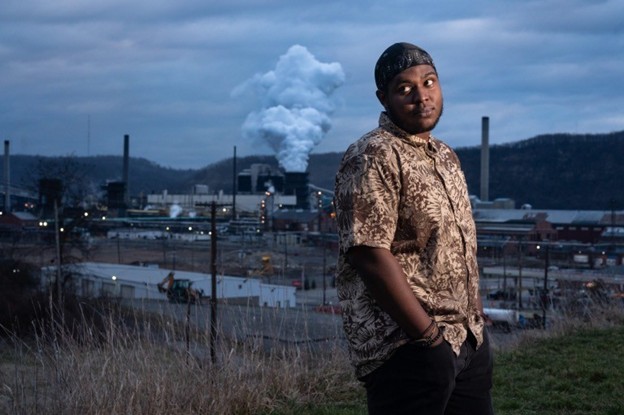
EIP’s Center for Applied Environmental Science monitors benzene emissions in the communities surrounding the U.S. Steel Clairton Coke Works in the Monongahela Valley region of Pennsylvania south of Pittsburgh. The data, which showed unhealthy long-term average benzene levels in three locations around the facility, is being used to push EPA and local officials to crack down on this carcinogenic pollution.
The U.S. Steel’s Clairton Coke Works is the largest coke plant in North America and a significant source of air pollution in Allegheny County. It also has a history of noncompliance with environmental regulations. Pollutants of concern emitted by the facility include particulate matter, carbon monoxide, volatile organic compounds, nitrogen oxides, sulfur dioxide, and several hazardous air pollutants, including benzene.
The Biden Administration EPA issued regulations in 2024 for steel mills and coke plants that strengthen emission limits for hazardous air pollutants and require fenceline air pollution monitoring.
Despite the proven effectiveness of fenceline air monitoring, the Trump Administration is delaying the implementation of these rules and has threatened to revoke them. This rollback will impose a heavy health burden on nearby communities and leave them in the dark about the risks they face, including from cancer-causing pollutants like benzene and chromium.
Qiyam Ansari, Executive Director of Valley Clean Air Now, said “in Clairton and the Mon Valley, we already live with some of the worst air quality in the nation, and benzene from the steel industry is a major contributor to the toxic burden our bodies carry. Removing the requirement for monitoring means children, seniors, and people with respiratory or immune conditions will breathe harmful chemicals without knowing it. In effect, the rollback allows industrial polluters to operate without accountability.”
EIP created a data map with facts about the hazardous air pollution from 20 steel manufacturing plants across the country and related coke plants—and quotes and photos of people who live nearby—to help draw attention to this detrimental policy change.
EIP is also taking legal action to reduce pollution around the coke plant. In 2023, the Environmental Protection Agency sided with EIP and other environmental groups by issuing an order objecting to an air quality permit issued to U.S. Steel’s Clairton Coke Works by the Allegheny County Health Department on the basis that it was not in compliance with the Clean Air Act.
More stories:
Student Stops the Biggest Trash-Burning Incinerator in America, with EIP’s Help

When she was just 16 years old, Destiny Watford decided to take on Maryland’s entire political establishment over a development project proposed near her neighborhood in Baltimore’s Curtis Bay.
A New York-based company called Energy Answers was proposing to build America’s biggest trash-burning incinerator in Fairfield, not far from her high school. The project would generate electricity by burning shredded garbage. But it would also add large amounts of air pollution in a working-class community already burdened with some of the worst air pollution in the state, not to mention coal plants, a sewage plant, chemical factories, and coal dust from an export terminal.
The developers had almost everyone on their side, including Governor Martin O’Malley and Mayor Stephanie Rawlings Blake. Local governments and even the Baltimore city school system had signed contracts to purchase power from the incinerator.
But the project did not have Destiny on its side. “We decided that it isn’t the fate of our community or our planet to be a dumping ground,” she said.
She and a group of her fellow students at Benjamin Franklin High School formed an organization called Free Your Voice to fight the incinerator. And over a period of four years, they held marches and protests and met with all of the local leaders who would listen to them.
The coalition was assisted by the Environmental Integrity Project, which provided the legal and technical muscle to back up the community organizing. EIP attorney Leah Kelly provided free legal services, scrutinizing and challenging the federal Clean Air Act Permit for the proposed incinerator. Kelly also worked with EIP’s team of analysts to study and document the air pollution in the neighborhood.
In the end, Watford’s activism with allies, including the Baltimore human rights group United Workers, succeeded in convincing Baltimore area governments to cancel their energy-purchase contracts with the developer. That dealt a financial blow to the project.
And Kelly’s legal work – which included a notice of intent to sue the developer in February 2016 – led to a March 17, 2016, decision by the Maryland Department of the Environment terminating the Clean Air Act permit to construct the project, which effectively drove a stake into its heart.
On April 18, 2016, Watford received an international award for environmental heroism in leading the fight for her neighborhood: the prestigious Goldman Environmental Prize.
“I’m from Baltimore, a place that is on the front lines of many injustices – from police brutality, to racial discrimination, economic inequality and environmental injustice,” Watford, now a student at Towson University, said at the Goldman Prize awards ceremony in San Francisco.
She expressed outrage that the political system had betrayed her neighborhood, in ways including a backward system of energy subsidies that rewards trash incineration as “clean energy.”
“The fact that legally, in my state, burning trash is considered a renewable energy source to receive public subsidies for climate solutions like wind and solar is a clear sign that our system is failing us and our planet,” Watford said.
In a post on their Facebook site, Watford’s group, Free Your Voice, voiced their thanks to EIP. “Powerful light shining on the work to stop the incinerator made possible by our collaboration with so many including the Environmental Integrity Project and the expert legal work by Leah Kelly. The diversity of strengths we were able to bring to the table – from arts and media to legal expertise – was critical in being able to lead past the environmental injustice of the incinerator towards positive fair development alternatives.”
Now, Watford and allies are trying to organize a healthier type of development on the vacant site – perhaps a community-owned solar farm.
Having won the international prize, Watford is determined to keep fighting for a cleaner and healthier Baltimore. And EIP will be there to lend a hand, if needed, to her and others fighting similar battles for environmental justice.
Clean Drinking Water for a Rural Texas Town
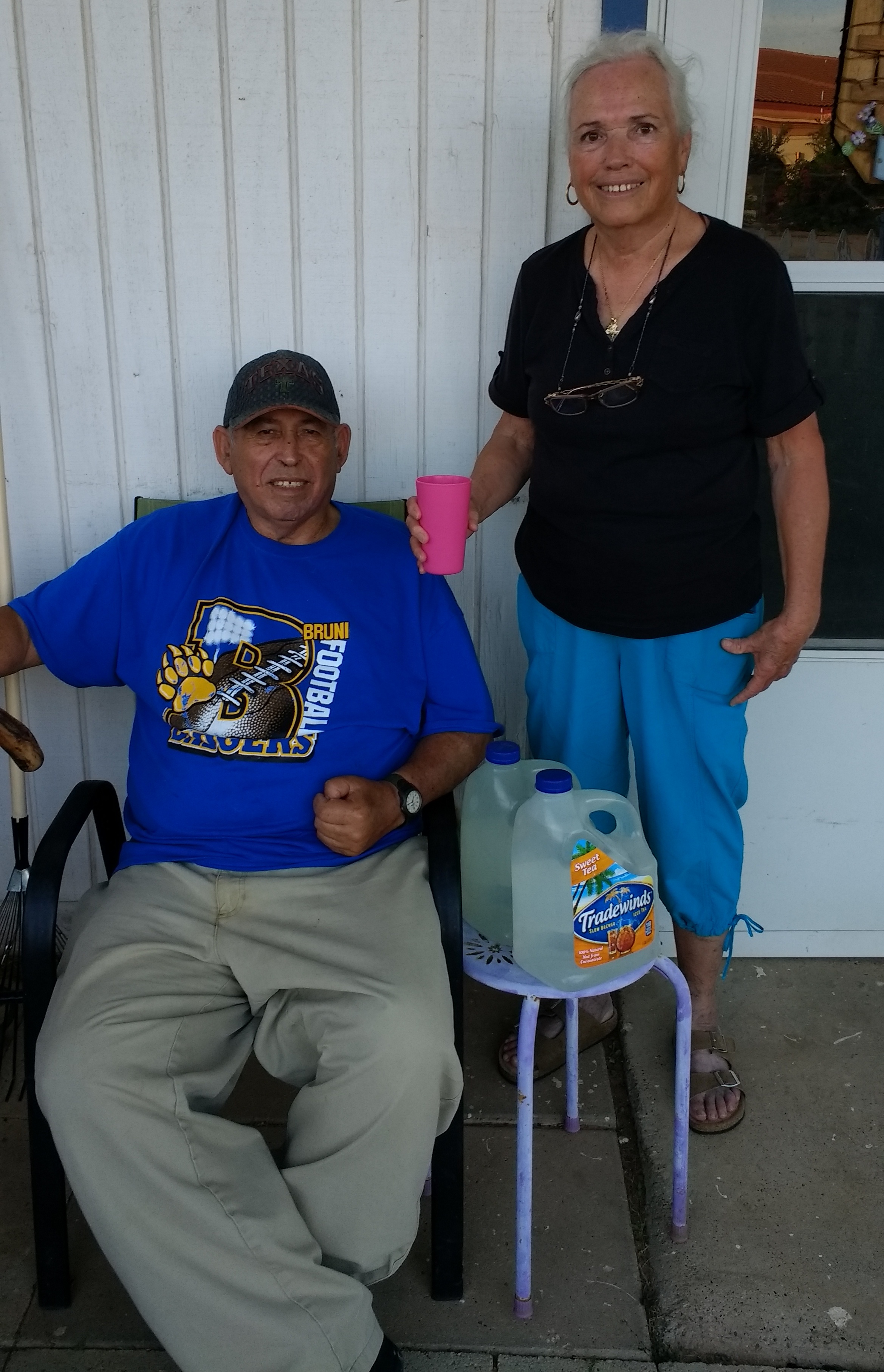
For decades, Berta and Oscar Chapa Jr. and their 600 neighbors in the remote south Texas town of Bruni have had to endure an ordeal just to drink water.
Once a week, Berta, a 76-year-old grandmother, and Oscar, a 75-year-old former oilfield worker disabled by injury, drive 13 miles to a nearby town, Hebbronville, to fill up 20 gallon-sized containers with water. As Oscar watches from the car, unable to help with the lifting, Berta fills up the buckets from a water dispensing machine. Then she lugs them back to their car so they can drive home and line them up on the floor of their laundry room.
This is their only way to get clean water for drinking and cooking. For years, the tap water in their home has had more than eight times the legal limit of arsenic, a cancer-causing element from the soil that may also contribute to heart diseases and loss of IQ among children.
In fact, Bruni’s public drinking water system has the highest levels of arsenic in Texas, according to a March 2016 report by the Environmental Integrity Project (EIP) titled, “Don’t Drink the Water.”
The report, which was inspired by the drinking water crisis in Flint, Michigan, examined state records and found 51,000 people in 34 towns across Texas – many isolated, rural, Latino communities like Bruni – with arsenic in their drinking water for at least a decade at concentrations above the health limits set by the Safe Drinking Water Act. Worse yet, neither Texas nor local water utilities have been adequately warning these residents about the contaminated water.
The publication of EIP’s report triggered more than 130 news reports across the state, including in the San Antonio Express News, Austin Statesman American, Dallas Morning News and on the NBC affiliate in Houston, KPRC-TV. And it also sparked real change for the people of Bruni.
After reading stories based on the EIP report in the San Antonio Express News and Texas Tribune, U.S. Rep. Henry Cuellar, a Democrat from Laredo who represents the people of Bruni, pushed the U.S. Department of Agriculture and the local county government to come up with $2 million to build a water filtration plant to remove the arsenic and solve the water contamination problem for Bruni.
“I would like to thank the Environmental Integrity Project for helping draw the attention needed to this important issue,” Oscar Chapa Jr. said. “Over the years our town had become accustomed to the limited uses for our contaminated water supply. Now, thanks to the new water filtration plant, my grandchildren and our community will have clean water and a healthier quality of life.”
The new water filtration plant should be constructed in about two years, and allow the families in Bruni to finally drink from the water in their own homes.
“I think the story just motivated everybody,” Congressman Cuellar said of the news article he read in the San Antonio Express News that used EIP’s report for its numbers.
“Congratulations for the EIP spurring some action in at least this small corner of Texas, though I’m sure the effects of that report are still reverberating,” said Brendan Gibbons, Environment and Water reporter for the San Antonio Express-News.
Following up on the Texas report, EIP continues to investigate drinking water contamination issues elsewhere in the U.S.
Examining California state records, the organization found that 95 community water systems serving more than 55,000 people have been providing tap water with illegal levels of arsenic for at least the last two years, while failing to warn people not to drink the water.
That report, “Arsenic in California Drinking Water,” – like the Texas report – urged the federal and state governments to invest more money in water filtration systems and provide clearer advisories to the public.
As a result of the Texas and California reports, the U.S. House Energy and Commerce Committee invited EIP Executive Director Eric Schaeffer and other experts to brief the committee’s staff on ways to improve the safety of the public drinking water systems nationally.
On September 23, 2016, U.S. Representatives Frank Pallone Jr. (D-NJ) and Paul Tonko (D-NY) introduced a bill called the Safe Drinking Water Act Amendments of 2016 that is intended to increase federal investments in clean drinking water nationwide and improve public reporting requirements about contamination.
But back in Bruni, Texas, Oscar Chapa is just happy that his grandchildren and great-grandchildren will finally be able to drink the water in their own homes.
Shutting Down America’s Biggest Coal Ash Waste Pond
Years ago, there was a wooded valley with a stream running through it in Chester, West Virginia.
Curt Havens, an assistant post master in the rural community, and his wife, Debbie, built their home and their life next to that hollow. They were raising two sons, enjoying their gardening – when one day a man came by, flashed a brochure and told them the good news. A manmade lake would be built in the valley, and all the neighbors could enjoy it for boating, fishing, and sunbathing.
The man worked for the power company, and the catch was this: His utility would also use the lake, but for something else – disposing of ash from a coal fired power plant several miles away in Shippingport, Pa. But he assured them the unusual arrangement would work – as the ash would be harmless and form a cement-like bottom for the pool.
“They said it was going to be like a resort area, where you could hike, bike, and picnic,” Debbie Havens, now 64, recalls. “But it was a total lie.”
What really happened was this: The power company, FirstEnergy, inserted a pipe into the wooded valley and pumped in so many millions of gallons of toxic coal ash slurry that a foul-smelling waste pond formed. The waste dump – nicknamed “Little Blue” – grew until it was 2.5 miles across, the largest coal ash waste impoundment in the U.S. And because it was unlined, Little Blue began to leak, releasing trickles of odorous sludge into nearby yards, destabilizing the foundations of homes, causing mold to flourish everywhere, and making the Havens afraid to eat from their garden because of all the dust.
“When the odors come through our home in the middle of the night, it wakes me up, it’s so bad,” said Debbie Havens, who said the rotten-egg odors aggravates her asthma. “Sometimes I would actually take my pillow and blanket and go into my walk-in closet and sleep in there, because there are no vents in there.”
Curt Havens developed thyroid cancer, as did several of his neighbors who live around the ash dump – although the cause is unclear.
Fed up, the Havens took action to stop the pollution with the help of the Environmental Integrity Project (EIP). In May 2012, EIP filed a notice of intent to sue First Energy on behalf of the Havens and a coalition of neighbors they lead called the Little Blue Regional Action Group. The action resulted in an intervention by the Pennsylvania Department of Environmental Protection and consent decree that will force the power company to close and cover the pond, pay an $800,000 penalty, and take responsibility for cleaning up the mess.
“We feel that it was a real victory, because nobody had ever challenged the power company before,” said Curt Havens, 67, who praised the work of EIP’s Lisa Graves-Marcucci and Lisa Widawsky Hallowell. “Without them, we would still be sitting here, twiddling our thumbs, trying to figure out what do to.”
Debbie Havens agreed: “We love them, we love them – and couldn’t have done it without them. It was just us ordinary people up against this giant.”
Curt Havens was so inspired by the fight to protect his neighborhood that he worked with EIP to travel to Washington D.C. and testify before EPA and a U.S. House subcommittee in favor of national regulations to stop pollution from coal ash dumps nationally.
He didn’t want the same kind of damage to destroy the lives of any more families across the country.
His efforts – and those of EIP and several other allied environmental groups – was somewhat fruitful. In 2015, EPA imposed the nation’s first national coal ash regulations, which – while not as strong as many had hoped – require more protections of groundwater and monitoring, and the closure of some coal ash ponds like Little Blue.
“We don’t want anybody else to go through the hell that we have,” said Debbie Havens.
Landmark Victory for Clean Water In Chesapeake Bay’s Biggest Tributary

In July 2019, EIP reached a historic agreement to reduce toxic pollutants leaking from a Pennsylvania power plant’s coal ash dumps into groundwater and the Susquehanna River, the largest Chesapeake Bay tributary. The agreement requires Talen Energy, owner of the Brunner Island Generating Station in York Haven, to pay a $1 million civil penalty – the largest penalty for coal ash pollution in the state’s history.
EIP represented the Lower Susquehanna Riverkeeper Association, Waterkeeper Alliance, and PennEnvironment in an August 28, 2018, notice of intent to sue Talen Energy for violating the Clean Water Act, which triggered the involvement of the Pennsylvania Department of Environmental Protection (DEP) to reach the historic settlement agreement. The agreement also requires Talen Energy to close and excavate one ash pond, monitor and address leakage of pollutants from other waste sites, and contribute $100,000 to fund supplemental projects to reduce local water pollution.
Ted Evgeniadis, the Lower Susquehanna Riverkeeper, worked closely with EIP’s staff throughout the process and was critical in achieving the momentous outcome.
“Thanks to the skillful work of the attorneys at the Environmental Integrity Project, our organization was able to achieve a landmark victory for clean water in the Chesapeake Bay’s biggest tributary,” said Evgeniadis. “Our grassroots organization detected high levels of toxic heavy metals leaching from Brunner Island’s unlined coal ash dump, and rallied local support for the cleanup of the leaky waste site. But the Environmental Integrity Project’s knowledge of the federal Clean Water Act – and the fact that they have top level, former EPA enforcement attorneys on staff – provided the legal muscle to help our community organization achieve our goals in cleaning up coal ash from the Susquehanna River.”
The Brunner Island coal-fired power plant, which opened in 1961, creates 442,000 tons of ash and other coal combustion wastes annually. For years, the company has disposed of coal ash waste in seven unlined ponds and a lined landfill that cover a combined 367 acres on an island bordered on the east the Susquehanna River and on the west by tributaries called Black Gut Creek and by Conewago Creek.
Because most of the ash sites are often saturated with groundwater and lack liners to prevent leakage, pollutants – including arsenic (a carcinogen), boron (which can cause nausea and vomiting), and lithium – have been seeping into groundwater, the Susquehanna River, and Black Gut Creek.
“The agreement will reduce the impact of toxic coal ash pollution on ground and surface waters, better control the plant’s wastewater discharges, ensure discharge of heated water is protective of aquatic life, and improve water quality for the Lower Susquehanna River and its tributaries,” said EIP Senior Attorney Lisa Hallowell.